Friday, 26 July 2019

Carbon conference 2019: football nanotube, great science and Madame Oberlin


Last month I visited the United States to attend the Carbon conference 2019 in Lexington, Kentucky with 400+ attendees. It was a great week of talks and discussions. I have briefly outlined some of the exciting findings in the field and some fun aspects of the week.

One of the conference jokes was that it was the most memorable carbon conference yet. Due to the fire at the conference venue and hotel on the night before the conference, flooding on the first day of the conference and a small earthquake on the second day. Many thanks to the conference organisers who did a heroic job!

The football nanotube


Carbon scientists have famously used the football to describe the geometry of the buckminsterfullerene molecule C60 since it was discovered as the seams describe the geometry of the bonds in the molecule, shown below.

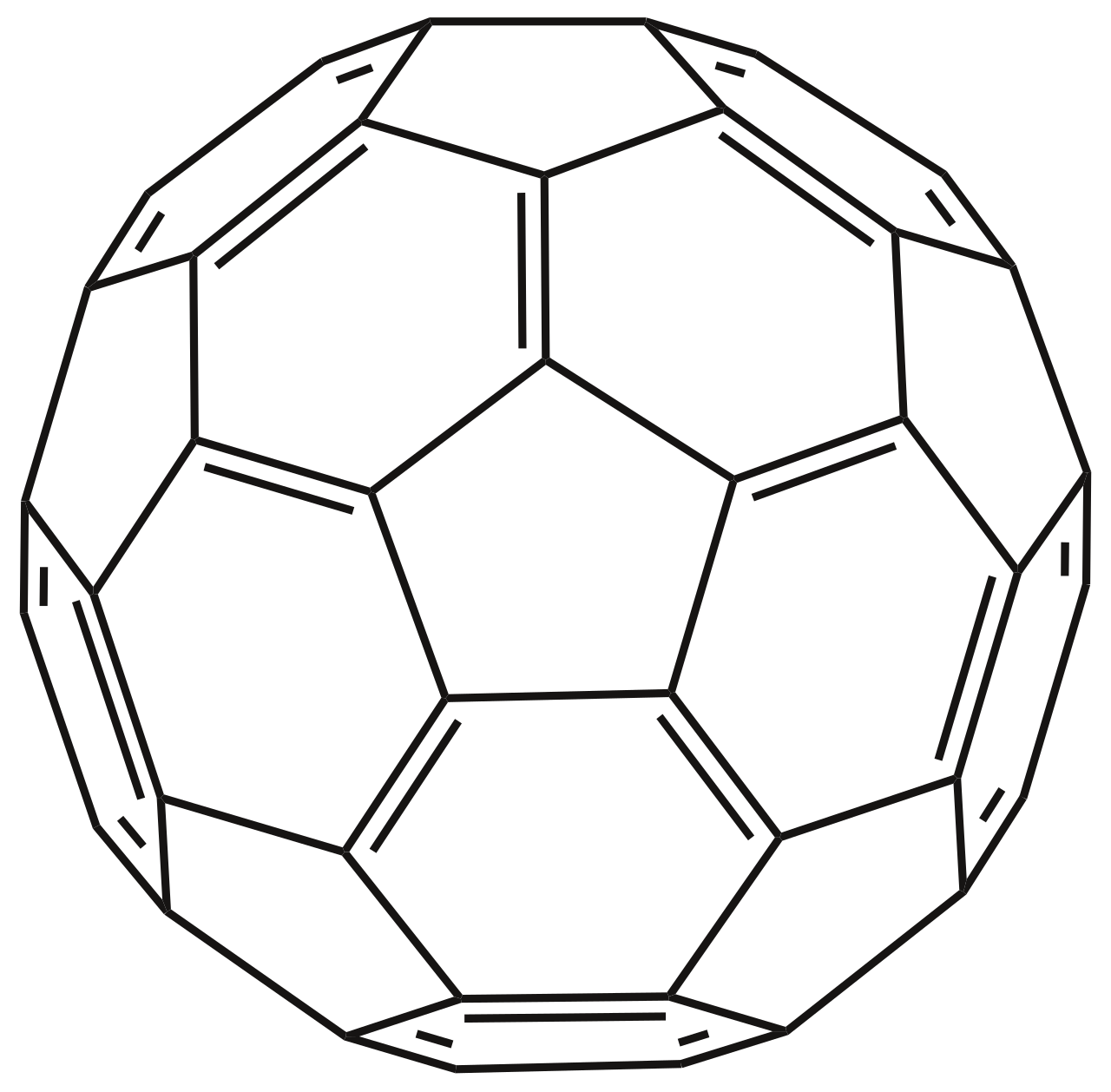
Buckminsterfullerene.svg

While at the Carbon conference 2019 Dr Fiona Smail spotted and photographed a carbon nanotube football in an art gallery by Brazilian artist Felipe Barbosa.


This represents an elongated fullerene or a carbon nanotube, which I have drawn below for comparison.


What exciting research was presented?


I cannot detail all of the interesting talks I attended but I will just highlight some exciting results that caught my attention.

Prof. Deborah Chung presented her results showing that isotropic carbons and carbon fibres possess conductive electrets. Electets are domains with permanent dipole moments within materials that orient within an electric field and retain their electric polarisation after the electric field is removed. What makes electrets unique in carbon materials is that they are embedded within a conductive material allowing for DC current to flow through the material allowing them to act as sensors or even generate power. More can be read here and here. A link was made during the conference to my recent work on the flexoelectric effect, which shows that bowl-shaped regions give rise to a permanent dipole moment in carbon materials.

Prof. Marc Monthioux presented work on developing thin layer diamond-like films and showed Raman spectroscopy evidence for these diamonoids structures. Some preliminary work can be read here and a preprint is also available

Dr Phillipe Ouzilleau (with Prof. Monthioux) presented work on a model for the process of graphitising carbons. The critical aspect of the work was distinguishing annealable and non-annealable defects. The later leading to non-graphitising carbons. These non-annealable defects are considered to arise due to curvature integration. More can be read here. This ties into the work I presented on how negative Gaussian curvature provides connected layered 3D graphene structures. 

Prof. Vander Wal showed the use of laser heating to distinguish different soot nanostructures. More amorphous soot can be distinguished by the formation of single shell structures or multiple shell, flower-like structure. More can be read here and here.

Dr Joseph Abrahamson (with Prof. Vander Wal) presented on the laser heating of carbon materials to explore their graphitisation finding a transformation to fullerene-like nanostructures before further transformation to a ribbon-like nanostructure. More can be read here. Dr Abrahamson also showed how the integration of curvature into carbon materials due to oxygen loss providing a pentagon gives rise to non-graphitising carbons while the loss of oxygen that provides hexagons leads to a graphitising carbon. More can be read here.

Prof. Murray Thomson presented a detailed particle model simulation for carbon black synthesis. More can be read here.

Dr. Adam Boies and Dr. Fiona Smail presented their work on understanding the fundamental aspects of carbon nanotube aerogels formation. Their recent review article is worth a read.

Prof. Mathews and colleagues presented a million atom model for soot reconstructed from HRTEM images. More can be read here. 

Prof. Mauricio Terrones presented a very nice review plenary on the future of carbon science. The full review has recently been published.

What did we present?


I was fortunate to be given three talks to present at the conference. The first was on my work on soot formation in flames. The second talk was on the lack of fullerenes in fullerene-like carbons. My last talk was on the topology of disordered graphenes. The talk slides are embedded below.

Angiras my colleague also presented on the optical properties of curved, crosslinked and radical PAH molecules. Between us, we also presented work from our colleagues Laura Pascazio and Kimberly Bowal who were unable to make it to the conference on "Investigating the self-assembly and structure of nanoparticles containing curved carbons" and "Degree of crosslinking in combustion carbons" respectively.


Link to the papers 1, 2, 3


Link to papers 1, 2


Link to papers 1, 2, 3, 4

I was also very fortunate to be given the Mrozowski Award for best oral presentation from a student.

Madame Oberlin

Agnès Oberlin (1925 - 2019)

On the fourth day of the conference, there was a very moving and comprehensive memorial for Agnès Oberlin (known in the community as Madame Oberlin). Stories were told of her dancing with Rosalind Franklin in Paris. Franklin interested her in carbon materials and the problem of graphitisability. She was provided with the second transmission electron microscopy available in Europe during her PhD and for the rest of her career focused on exploring the nanostructure of carbon materials using this instrument. Some of her remarkable contributions were surrounding the transformations of carbon materials during the process of graphitisation, understanding the formation of alignment during carbonisation - mesophase and the structure of carbon fibres and non-graphitising carbon. The carbon journal has a tribute written from her colleagues and friends, which provides an in-depth look into her many contributions (link).


Wednesday, 29 May 2019

Combustion science for Climate Solutions - Pint of Science

I recently gave a presentation at a Pint of Science event in Singapore entitled "Combustion Science for Climate Solutions". Here are the slides with my transcript added into the slides.

Wednesday, 13 March 2019

How are the atoms arranged in charcoal?


I recently published a paper on the structure of charcoal on the nanoscale with Leonard Nyadong, Caterina Ducati, Merilyn Manley-Harris, Alan G. Marshall, and Markus Kraft. Here is a link to the preprint and the published article in the journal Environmental Science & Technology.

In brief
  • Charcoal is the black carbon product produced from heating biomass in a low oxygen environment. 
  • Why would we be interested in studying charcoal? It has recently been suggested as a potential carbon dioxide storage method to combat climate change (called biochar in this capacity). Instead of the photosynthetically trapped carbon dioxide being released when waste biomass decomposes it is trapped by carbonisation into stable biochar that will not break down for thousands of years. One advantage is that it can be sold as it can improve soil fertility. We need to understand the nanostructure of charcoal in order to understand how long it is stable in the ground and how best to optimise its properties. Charcoal can also be used in electronic applications and
  • The currently understood nanostructure of charcoal is that it is made up sheets of carbon atoms in a "chicken wire" or hexagonal arrangement. These sheet-like molecules then stack into small graphitic disordered crystals. Below is a picture of some of these stacked regions in a char made from resin.

(Top) Model of stacked ribbons of carbon (Bottom) Ribbon-like graphene structures imaged in char [Guo et al. 2012]. Used with permission from Wiley.
  • Some of the highest magnification electron microscopes have found evidence for different nanostructures not planar but curved sheet-like carbon sheets where the curvature arises from non-hexagonal rings that warp the sheets.
    Non-hexagonal rings imaged in chars indicating curvature [Guo et al. 2012]. Credit permission granted from Wiley 
  • When scientists see curved carbon nanostructures the first thing that comes to our minds is the most famous curved carbon structures - fullerenes which are cages of carbon that form a spherical net. The most well known curved carbon molecule is C60 buckminsterfullerene with atoms arranged in a similar manner to the intersection of seams in a soccer ball with 20 hexagonal rings, and 12 pentagonal rings of carbon. Given the presence of non-hexagonal rings, many suggested the nanostructure should be fullerene-like. 
C60 Buckminsterfullerene Credit
  • If charcoal is fullerene-like many researchers expected to see C60 as it was thought to be a stable form of carbon as it is readily produced in high-temperature carbon arcs, but none could be found.
  • We produced some high-quality charcoal in a gasifier, see my other blog post on gasification for more information. But for this study, it served to produce high-quality charcoal with a well-defined nanostructure so no tar or soot stuck to the surface.

    Gasifier was based on the Microlab gasifier from Fluidyne Gasification Ltd.
  • We used some of the most precise machines in the world to weigh the molecules in charcoal  the Fourier Transform Ion Cyclotron Resonance Mass spectrometer (here is a video if you are curious about how it works from one of the authors Prof. Marshall).  We did not find any C60 or C70 in gasification charcoal as has been found before. We did however found a common ion in many charcoals (mass to charge ratio of m/z 701) which we previously thought could be part of the nanostructure as it is near to that of C60 (m/z 720), but we found this to be an unstable breakdown product and not a molecule that lasted upon heating. 
    Ultra high resolution mass spectrometer
  • Using a different mass spectrometer that used a laser beam to ablate the sample and create charge molecules we could look at some heavier species and consider the nanostructure. We found a collection of molecules (peaks) that matched what we had found previously in a very curved carbon prepared from C60 arc-carbon that had been heated (see my previous post on these experiments).
    Mass spectrum from charcoal showing oxygenated fragments
Mass spectrum from heated and oxygenated fullerene arc-carbon showing similar oxygenated species.
  • We found oxygen was present in all of these structures and a very similar set of molecules were found, which we could not reproduce repeating the experiment with graphite. This indicated that charcoal shares a curved oxygenated nanostructure with heat treated arc-carbon.
  • A model was developed to explore the presence of non-hexagonal rings in a 3D graphene network. 
Stacked fulleroid-like model of the surface of charcoal showing the integration of non-hexagonal rings
  • We are now working on understanding how this curvature is integrated into the structure and what  the topology (shape) of these sheets are. We also want to apply this understanding to improve technologies that rely on these materials such as carbon capture using biochar, water purification with activated carbons and energy storage applications like electrodes in batteries and supercapacitors.


This project spanned a decade and involved the help of many others. I want to thank Mr Doug Williams (Fluidyne Gasification Limited) for his advice in designing and building the gasifier and Mr Peter Wilkinson (Wilkinson Transport Engineers) for allowing me access to the workshop to construct the gasifier. Prof. Brian Nicholson (University of Waikato) for allowing me access to the laboratory space and instruments. I would also like to thank Prof. Robert Curl (Rice University) for putting me in contact with the late Prof. Harry Kroto who arranged for the application of the FT-ICR MS experiments with the group at Florida State University. Finally, I would like to thank Assoc. Prof. Nigel Marks, Dr Irene Suarez-Martinez and Dr Carla de Toma ́s (Curtin University) for providing the annealed molecular dynamics models online, which were used and modified to construct the model seen above